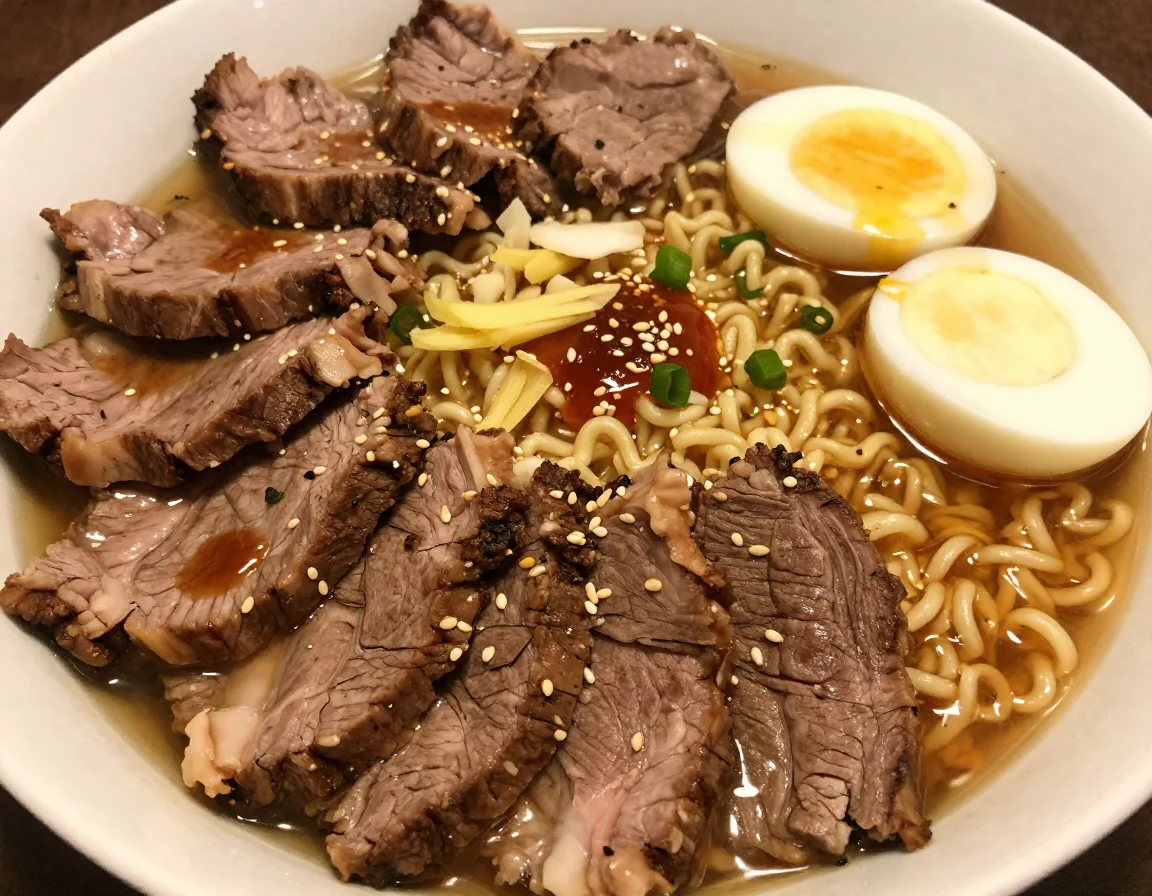
There’s something magical about transforming a simple packet of ramen into something extraordinary. I still remember the first time Stephen and I experimented with Korean Ramen Beef in our California City kitchen – we had leftover beef from Sunday dinner, a few packs of instant ramen, and a craving for something comforting yet exciting. What started as a “let’s see what happens” moment became one of our most requested recipes.

This Korean Ramen Beef perfectly embodies what SecondRecipes.com is all about: taking familiar ingredients and giving them a delicious second chance. The tender beef mingles with chewy ramen noodles in a savory, umami-rich broth that’s both satisfying and surprisingly sophisticated. It’s comfort food with a Korean twist that brings warmth to any table.
Why You’ll Love This Korean Ramen Beef Recipe
This Korean Ramen Beef transforms humble instant ramen into a restaurant-quality meal that’s ready in under 30 minutes. Unlike traditional ramen that can take hours to develop complex flavors, this recipe builds incredible depth quickly through smart layering of ingredients. The beef becomes melt-in-your-mouth tender while the noodles soak up all those beautiful Korean-inspired flavors.
What makes this Korean Ramen Beef special is its perfect balance of sweet, savory, and spicy elements. The gochujang adds just enough heat without overwhelming your taste buds, while the soy sauce and brown sugar create that signature Korean glaze we all crave. Plus, it’s incredibly budget-friendly – you’re getting maximum flavor impact from minimal investment.
This recipe also adapts beautifully to whatever vegetables you have on hand. Whether you add mushrooms, bok choy, or carrots, this Korean Ramen Beef becomes a complete, nutritious meal that satisfies both your hunger and your soul.
Ingredients You’ll Need
| Ingredient | Amount |
|---|---|
| Thinly sliced beef sirloin | 1 pound |
| Instant ramen noodles (discard seasoning packets) | 4 packages |
| Beef broth | 6 cups |
| Gochujang (Korean chili paste) | 2 tablespoons |
| Soy sauce | 3 tablespoons |
| Brown sugar | 2 tablespoons |
| Sesame oil | 2 tablespoons |
| Garlic, minced | 4 cloves |
| Fresh ginger, grated | 1 tablespoon |
| Green onions, chopped | 4 stalks |
| Large eggs | 4 |
| Vegetable oil | 2 tablespoons |
| Sesame seeds | 1 tablespoon |
Substitutions & Variations
The beauty of this Korean Ramen Beef lies in its flexibility. If you can’t find gochujang, substitute it with sriracha mixed with a tablespoon of miso paste – you’ll get similar umami depth with manageable heat. For the beef, chicken thighs work wonderfully and stay incredibly tender throughout cooking.
Vegetarians can create an equally satisfying version by replacing the beef with extra-firm tofu or mushrooms. Shiitake mushrooms particularly excel in this Korean Ramen Beef variation, offering that meaty texture and earthy flavor that complements the Korean seasonings perfectly.
If you’re watching your sodium intake, use low-sodium soy sauce and reduce the amount by half. The Korean Ramen Beef will still deliver plenty of flavor thanks to the gochujang and aromatics. For those avoiding gluten, substitute the regular ramen with rice noodles or shirataki noodles.
Want to add more vegetables? Snow peas, baby spinach, mushrooms, and corn all work beautifully in this Korean Ramen Beef. Add heartier vegetables like carrots early in the cooking process, while leafy greens can go in during the last few minutes.
The beauty of this Korean Ramen Beef lies in its flexibility. If you’re looking for a delightful dessert to complement your meal, check out Honey Toast: The Ultimate Guide to This Irresistible Dessert.
Step-by-Step Instructions
Start by preparing all your ingredients – Korean Ramen Beef comes together quickly once you begin cooking. Slice your beef against the grain into thin strips, roughly ¼-inch thick. This ensures tender, easy-to-eat pieces that cook evenly in the broth.
Heat one tablespoon of vegetable oil in a large pot over medium-high heat. Add the sliced beef and cook for 2-3 minutes until just browned but still slightly pink inside. The beef will continue cooking in the broth, so avoid overcooking at this stage. Remove the beef and set aside.
In the same pot, add the remaining tablespoon of oil. Sauté the minced garlic and grated ginger for about 30 seconds until fragrant. This builds the aromatic foundation for your Korean Ramen Beef.
Whisk together the gochujang, soy sauce, brown sugar, and sesame oil in a small bowl. Pour this mixture into the pot and cook for another minute, allowing the flavors to meld and intensify.
Add the beef broth and bring to a rolling boil. Once boiling, add the ramen noodles and cook according to package directions, typically 2-3 minutes. The noodles should be just tender but still have a slight bite.
Return the cooked beef to the pot and simmer for 2 minutes to heat through. Taste and adjust seasoning – your Korean Ramen Beef should have a perfect balance of savory, sweet, and spicy flavors.
In the final minute, carefully crack the eggs directly into the simmering broth, spacing them evenly around the pot. Cover and cook for 2-3 minutes for soft-poached eggs, or longer if you prefer firmer yolks.
Ladle the Korean Ramen Beef into serving bowls, making sure each bowl gets an egg and plenty of beef. Garnish with chopped green onions and sesame seeds for the perfect finishing touch.
Pro Tips for Success
The secret to exceptional Korean Ramen Beef starts with properly slicing your beef. Always cut against the grain to ensure maximum tenderness – this makes even less expensive cuts taste luxurious. If your beef is slightly frozen, it’s actually easier to achieve those paper-thin slices.
Don’t skip the step of browning the beef first. This creates a beautiful fond in the pot that adds incredible depth to your Korean Ramen Beef broth. Those caramelized bits are pure flavor gold.
When adding the gochujang mixture to the pot, let it sizzle and cook for a full minute. This blooming process intensifies the flavors and removes any raw paste taste, resulting in a more complex Korean Ramen Beef.
For perfect soft-poached eggs, create small whirlpools in the simmering broth before cracking each egg. This helps the whites stay together and creates those Instagram-worthy runny yolks that make Korean Ramen Beef extra special.
Temperature control matters significantly. Keep the broth at a gentle simmer rather than a rolling boil once you add the beef back in. This prevents the meat from becoming tough and maintains the silky texture that makes this Korean Ramen Beef irresistible.
The secret to exceptional Korean Ramen Beef starts with properly slicing your beef. For another delicious dish that showcases the versatility of seafood, explore Shrimp Roll: A Delicious and Versatile Delight.
Storage & Reheating Tips
Korean Ramen Beef tastes best when served immediately, but leftovers can be stored in the refrigerator for up to three days. Keep the components separate if possible – store the broth and noodles together, but keep any fresh garnishes separate until serving.
When reheating Korean Ramen Beef, do so gently over medium-low heat. Add a splash of additional broth or water if the noodles have absorbed too much liquid during storage. The noodles will continue to soften, but they’ll still be delicious.
If you plan to make Korean Ramen Beef ahead, consider slightly undercooking the noodles initially. They’ll reach perfect tenderness during the reheating process without becoming mushy.
For best results, add fresh eggs during reheating rather than trying to reheat pre-cooked eggs. This ensures you get those perfect runny yolks that make Korean Ramen Beef so satisfying.
What to Serve With This Recipe
Korean Ramen Beef is hearty enough to stand alone, but it pairs beautifully with simple Korean side dishes. Kimchi adds a perfect tangy, spicy contrast that cuts through the rich broth, while pickled radishes provide a refreshing crunch.
For a more substantial meal, serve your Korean Ramen Beef alongside steamed jasmine rice or even crispy rice cakes. The rice helps absorb the delicious broth and makes the meal more filling.
Fresh vegetables like cucumber salad or blanched bean sprouts add textural variety and help balance the richness of the Korean Ramen Beef. These light accompaniments also add important nutrients to round out your meal.
Don’t forget about beverages – green tea or sparkling water with lime perfectly complement the bold flavors of Korean Ramen Beef without overwhelming your palate.
Korean Ramen Beef is hearty enough to stand alone, but it pairs beautifully with simple Korean side dishes. To satisfy your sweet tooth after this savory meal, try making Banana Bread Cookies: The Perfect Blend of Comfort and Sweetness.
FAQs
Can I make Korean Ramen Beef with chicken instead of beef?
Absolutely! Chicken thighs work particularly well in this recipe. Cut them into bite-sized pieces and follow the same cooking method. Chicken creates an equally delicious Korean Ramen dish with a lighter flavor profile.
What can I substitute for gochujang?
If you can’t find gochujang, mix sriracha with miso paste for similar umami depth. Alternatively, use sambal oelek with a touch of brown sugar, though the flavor will be slightly different from traditional Korean Ramen Beef.
How spicy is Korean Ramen Beef?
This Korean Ramen Beef has a mild to moderate heat level. The gochujang provides warmth rather than overwhelming spice. You can easily adjust the heat by using more or less gochujang according to your preference.
Can I make this recipe vegetarian?
Yes! Replace the beef with extra-firm tofu or mixed mushrooms, and use vegetable broth instead of beef broth. The Korean seasonings work beautifully with plant-based proteins while maintaining the dish’s satisfying character.
How do I prevent the eggs from overcooking?
Keep the broth at a gentle simmer rather than a rolling boil when adding eggs. Cover the pot and cook for exactly 2-3 minutes for soft, runny yolks. The residual heat will continue cooking the eggs even after removing from heat.
Korean Ramen Beef is a delightful fusion dish that combines traditional ramen noodles with savory beef and Korean flavors. This dish exemplifies the creativity of home cooking, allowing for various adaptations and ingredient substitutions to suit personal tastes, making it a popular choice for many food enthusiasts. For more information, visit this Korean cuisine page.
Nutrition Information (per serving)
| Nutrient | Amount |
|---|---|
| Calories | 445 |
| Protein | 32g |
| Carbohydrates | 28g |
| Fat | 24g |
| Fiber | 2g |
| Sodium | 1,280mg |
| Sugar | 8g |
This Korean Ramen Beef provides excellent protein content while delivering complex flavors that satisfy both comfort food cravings and nutritional needs. The combination of lean beef, eggs, and nutrient-rich broth creates a well-balanced meal that energizes without weighing you down.
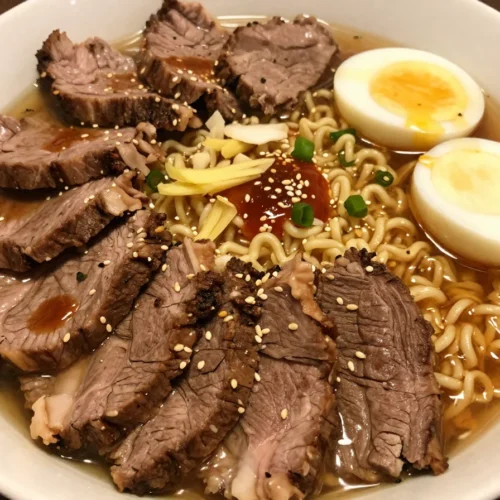
Korean Ramen Beef
Ingredients
- 1 pound thinly sliced beef sirloi
- 4 packages instant ramen noodles (discard seasoning packets)
- 6 cups beef broth
- 2 tablespoons gochujang (Korean chili paste)
- 3 tablespoons soy sauce
- 2 tablespoons brown sugar
- 2 tablespoons sesame oil
- 4 cloves garlic, minced
- 1 tablespoon fresh ginger, grated
- 4 stalks green onions, chopped
- 4 large eggs
- 2 tablespoons vegetable oil
- 1 tablespoon sesame seeds
Instructions
- Slice beef against the grain into thin strips, roughly ¼-inch thick.
- Heat 1 tablespoon of vegetable oil in a large pot over medium-high heat. Add sliced beef and cook for 2-3 minutes until just browned but still slightly pink inside. Remove beef and set aside.
- In the same pot, add remaining tablespoon of oil. Sauté minced garlic and grated ginger for about 30 seconds until fragrant.
- Whisk together gochujang, soy sauce, brown sugar, and sesame oil in a small bowl. Pour this mixture into the pot and cook for another minute.
- Add beef broth and bring to a rolling boil. Once boiling, add ramen noodles and cook according to package directions, typically 2-3 minutes.
- Return cooked beef to the pot and simmer for 2 minutes to heat through. Taste and adjust seasoning.
- In the final minute, crack eggs directly into the simmering broth. Cover and cook for 2-3 minutes for soft-poached eggs.
- Ladle Korean Ramen Beef into serving bowls, ensuring each bowl gets an egg and plenty of beef. Garnish with chopped green onions and sesame seeds.